


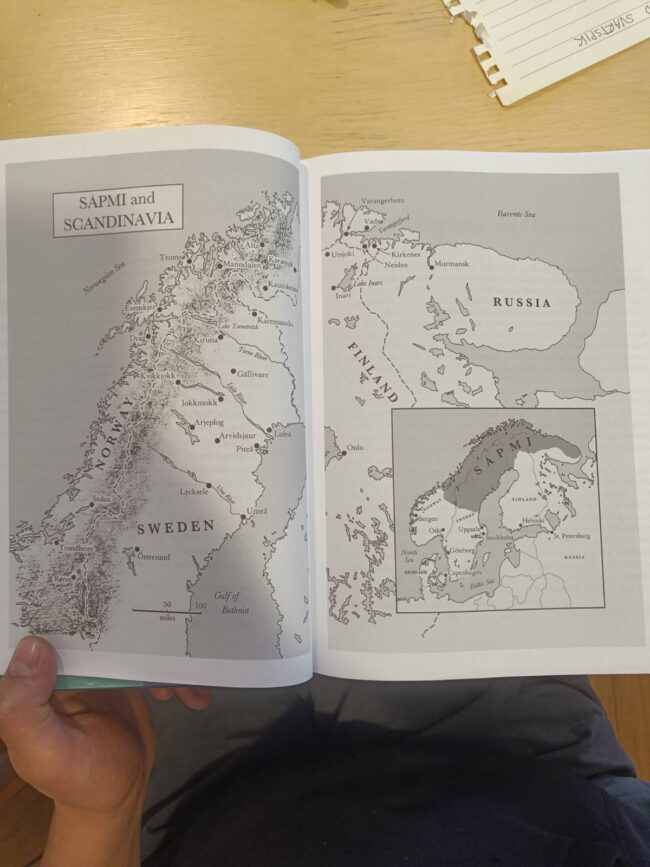
note: all place names are (first) written in Sámi language* (and then in Swedish)
The start and first weeks of the Biketour this year are in Swedish occupied Sápmi. To travel further and learn more about this region, we decided this year to have a pretour where we travel without our bikes and by hitchhiking instead.
Sápmi is the land of indigenous Sámi people, and has been colonized by Sweden, Finland, Norway, Russia and its predecessors and since been under their dominion. The colonial and racist treatment of Sámi people continues nowadays especially through so-called green transition with land-grabbing and extractivism, increasing burdens upon reindeer herding culture. There have been and still are Sámi projects and protests resisting ethno- and ecocide.
We chose to visit Jåhkamåhke as it is a significant place in Sápmi. The Ájtte Museum is here, as well as the annual winter market, which celebrated its 400th birthday in 2005. The struggle against further industrialisation and colonisation is strongly felt here because of the threat of a new iron mine in the region.
Scaffolding and hitch-hiking (Monday June 8th)
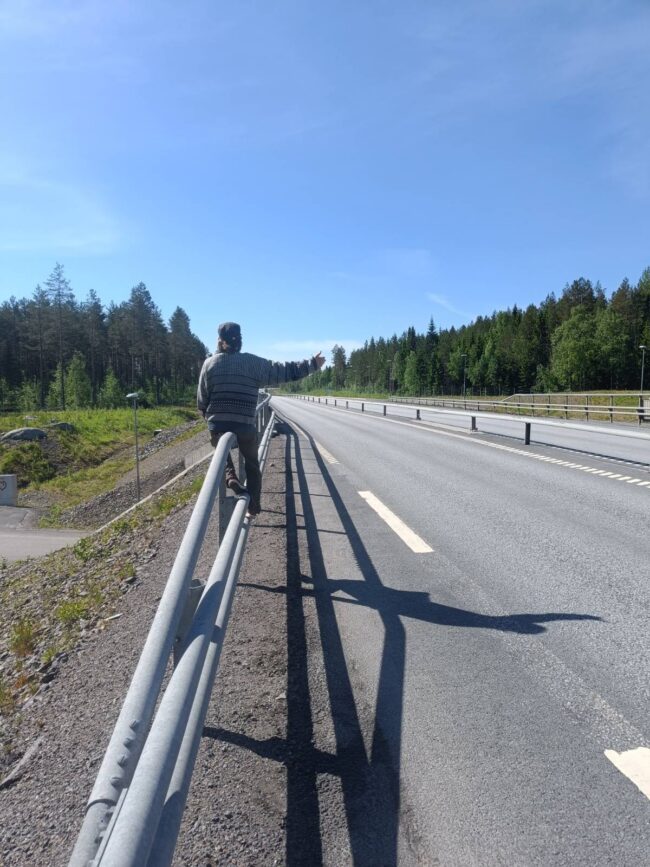
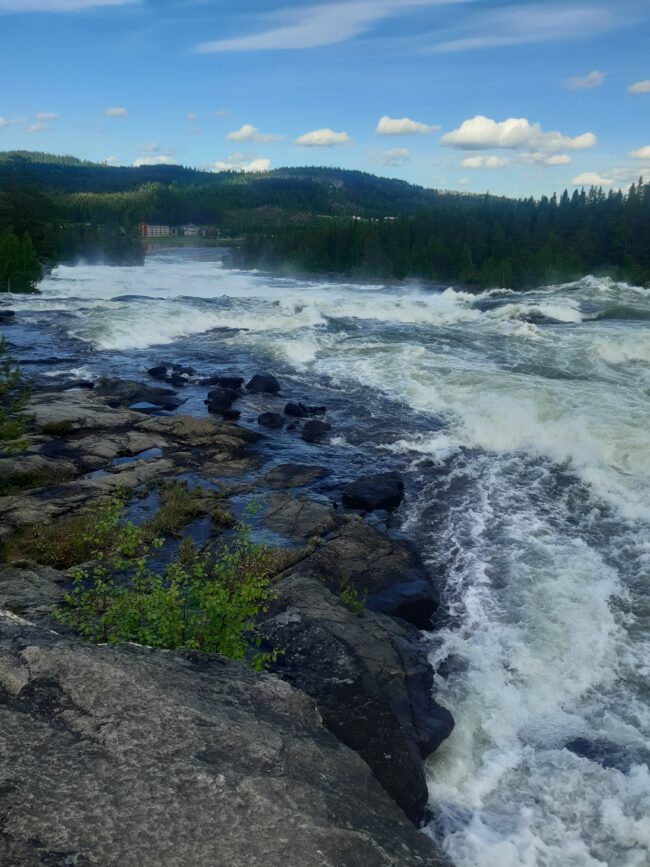
The four of us were able to spend a night at lovely hosts in Bygdeå and store our bikes here during the pre-tour. The next day, our hosts dropped us off at the E4 highway, where we started our hitch-hiking adventure. After about 1,5 hours both duos got a ride to the next „big town” of Skellefteå. Magically we came together again at the point where we started hitch-hiking further north. One team was brought there by a scaffolder. After an hour or two, another scaffolder picked us up. His destination? Giron/Kiruna, the town that was built for its mining. 80% of European Union iron ore comes from here. Today, the city is being moved, building by building, due to the expansion of the underground iron ore mine. For us, the driver did a little detour, so he could drop us off in Jåhkamåhke. On the way there, we had a little pitstop at Storforsen, an impressively voluminous waterfall.
Bananas, smoke and mosquito repellant
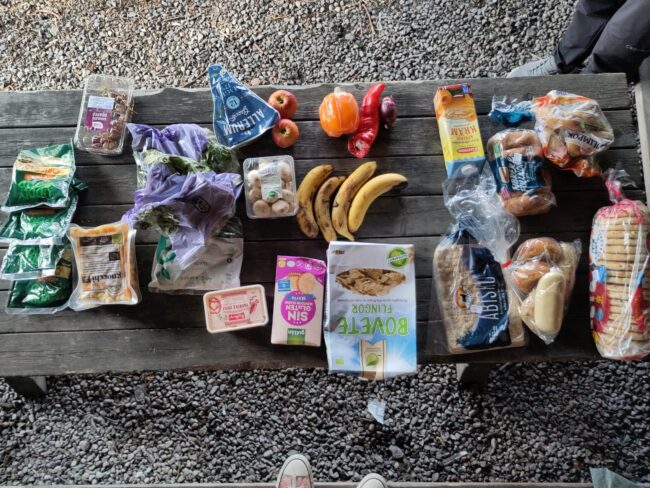
We found a little cabin near town, which became our base for the next days. We also found a good provider in one of the local supermarket’s bins, which fed us for several days (lots of bananas! :)). We cooked on our little ecotopia pocket stove or on the fire at the cabin. For those coming to join us soon: be prepared to smell like smoke and mosquito repelling spray!
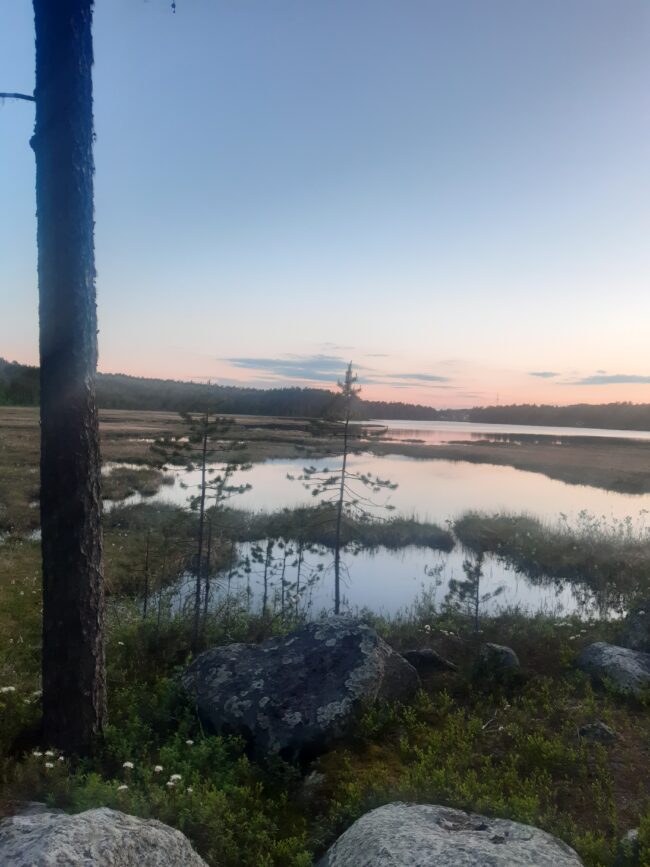
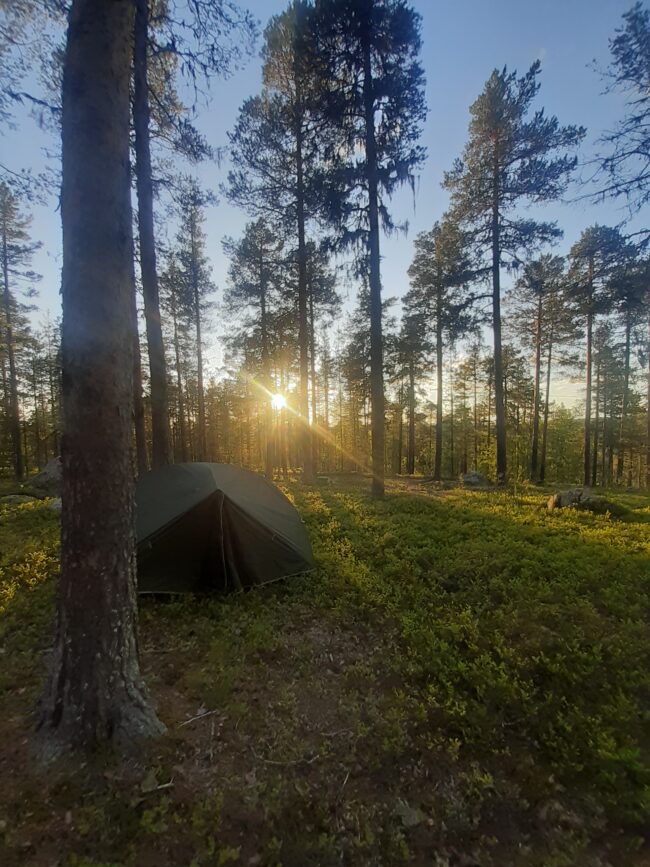
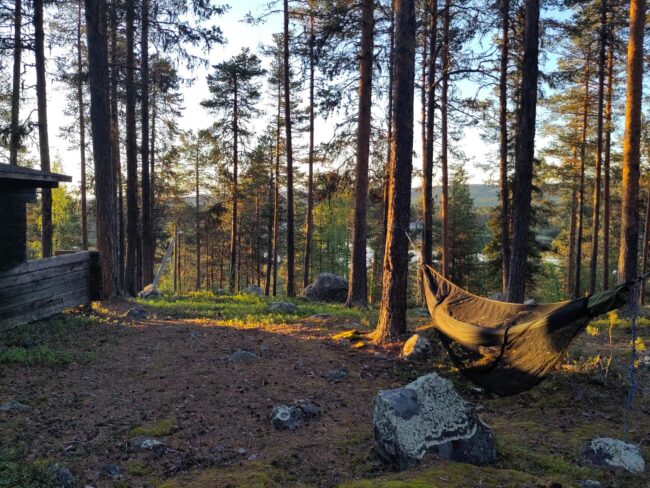
Our cabin had a view of the Dálvvadisjávrasj/Talvatissjön, a lake that has been made bigger artificially through a small dam. As Jåhkamåhke is just within the arctic circle, we could swim in the midnight sun. Further up the hill we could visit a lookout point and view the whole town. From our tent or hammock we could hear and see the ravens.
History and oppression of Sámi people and threats to Sápmi
Thanks to some helpful suggestions and contacts given to us by our hosts and their friends in Bygdeå, we managed to get in touch with and meet some people in town, who were so generous to share their stories with us.
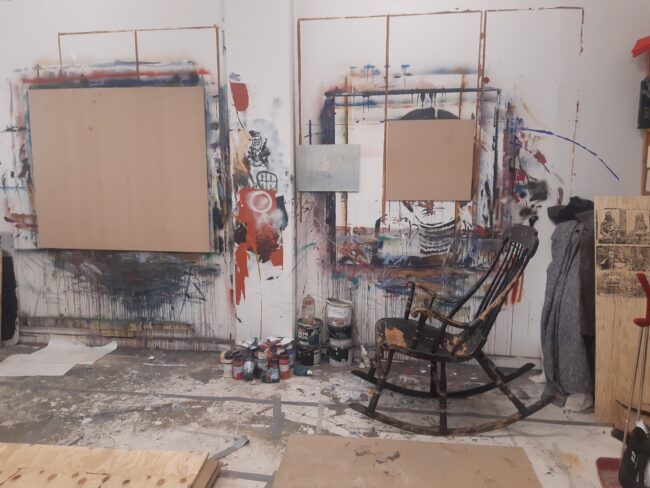
Anders Sunna is a Sámi street artist and painter whose works tells the story of his reindeer herding family and their resistance to the state’s colonisation of the Sámi people. His family (father and uncles) was persecuted after refusing to go along with the false interpretation of the law that demanded they take care of others reindeers for free. They were bullied by the state to the extent that their reindeer marks (their right to herd, a traditional knowledge passed on throughout generations) were taken away, and hundreds of their reindeer killed. A 30km long fence was constructed to prevent their reindeer to go back to their natural grazing lands. Read the story here.
We met Anders in his art studio and then went for a coffee together. With him we learned some of the strategies the Swedish government used to and uses to divide and oppress the Sámi people. For example, in the region where he grew up, the local Sámi language wasn’t taught in schools and kids were forced to learn Finnish. The latter is connected to the narrative that the Finns are the original people living in these lands. Today Sámi languages are taught in schools, but the oppression of the Sámi people takes different forms. For example, by dividing Sámi people and setting them up against each other. More rights are extended to Sámi in the mountains compared to Sámi in the forests**. The Sami Parliament receives money from the Swedish government but the government decides where the money goes: more to language, less to reindeer herding and right to land. Also, despite helping to write the UN declaration of the rights of indigenous peoples, Sweden still hasn’t ratified it.
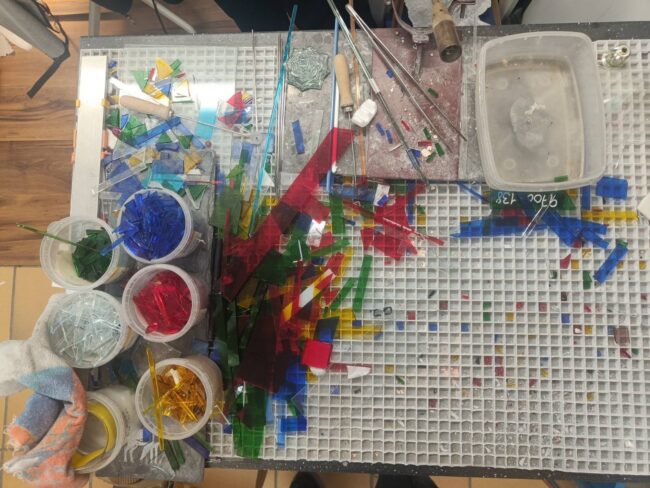
Lena Sandberg Johansson’s mother was a skilled craftswoman. Today, Lena’s art is mainly glass-based. She has a small studio in Jåhkamåhke where she makes both artistic and practical objects out of glass. On her website she relates: “Glass is a fascinating material—both hard and fragile at the same time. Working with it is reminiscent in many ways of traditional Sámi handicrafts: carefully assembling small pieces to create the right shape and color. The work requires a great deal of thought, calm, and patience; you can’t rush anything. This is something I’ve carried with me since childhood, thanks to my mother, who was a skilled craftswoman. She made creativity, crafts, and art a natural part of my upbringing.”
Also Lena told us about the time when she would go to school and kids would hide their Sámi identity. Kids would know other kids were Sámi, but many wouldn’t speak Sámi or say they are Sámi. At the time her mother went to school, kids were punished if they spoke Sámi. We also learnt that part of the Christianisation of the Sámi people consisted of the obligation to change to a Swedish name when buying land. This way a lot of Sámi have lost links to their heritage. Today it is possible to get your name back – if you can trace it.
Today the Sámi fight is long from over. The Swedish government continues to take water and land for the so-called “green industries”***. Mining in Giron/Kiruna, for example, pollutes the water and cuts through the landscape, forcing reindeer herders to move their reindeer by trucks. At the same time, climate change is also making it harder for reindeer to access food that grows on the land – when ice forms too quickly they cannot dig through it to access food. Buying food for reindeer herds is extremely expensive. Lena shared with us her fear that if the current trends continue, reindeer will disappear.
We met with photographer and long time activist Tor Tuorda for a rather brief but powerful conversation. We felt his anger and sadness regarding the list of struggles in the region. In particular, he is resisting the creation of a new iron mine near his home since 20 years. The Jokkmokk Mining District spreads like a cancer as the infrastructure to mine iron, copper, uranium, etc. expands. Forestry companies, mining companies, wind farms, biomass, .. the list goes on. Even if one fight is won, the next one is around the corner. For more information, we recommend the book No mine in Gállok Ecocide and colonialism in Swedish-occupied Sápmi, also available online.
We met with volunteers from the forest protection organisation Skydda Skogen. When part of the forest is scheduled to be cut down, these volunteers examine the forest to report on the biodiversity and on any endangered species they may find. This is a job the state should be doing but is conveniently slacking on. It’s easier for them to destroy the homes of vulnerable species when they don’t know they were there in the first place.
“There’s a sign! Must read it!”
The town of Jåhkamåhke provides for the curious. Information signs are spread throughout the town; some of us had a hard time passing one without reading it.
Jåhkamåhke was started in the 17th century, on the place of the Sámi winter settlement Dálvvadis. In 1607, the Swedish state colonised this region by establishing a church and a fair here. Church attendance was mandatory at the time, also for Sámi people who at the time had their own, non-Christian religions. At the same time, the Swedish state opened a fair here, and banned other trade in the region. The state also forced Sámi people to pay taxes in specific kind of furs, which changed what kind of animals they hunted, and forcing Sámi people to hunt animals they didn’t have use for.
The winter market is still happening annually in winter but is now a place of community. In 2005 it celebrated its 400th anniversary. Read more about the history and the current market here.
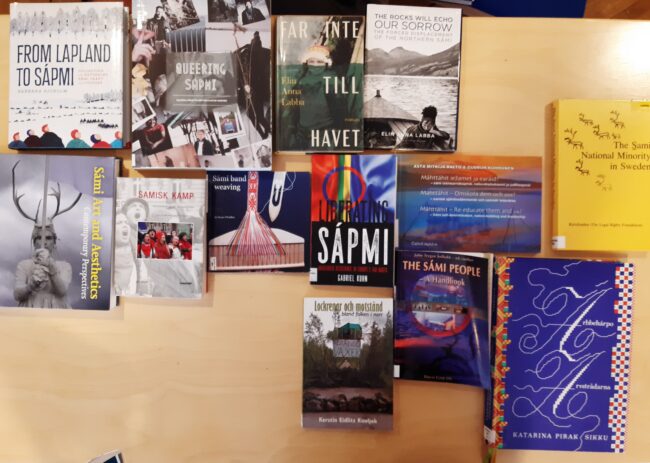
At the Jåhkamåhke municipal library Linda introduced us to a series of books about Sápmi. We spent the day in the library until closing time to read as much as we can about Sámi history and more recent events. How did Sámi people used to live before colonisation and industrialisation and how do they live now? Why was/is Sápmi referred to by the racist name Lapland? When was the end of drum-time? What struggles have Sámi people been involved in, and how do they resist? How do queer Sámi people challenge norms and expectations about gender and sexuality? How did the work and religions of Sámi men and women complement each other before colonisation?
The Ájtte Museum has both a botanical garden and an indoor section. In the botanical garden we learnt about local and regional, edible and toxic plants, as well as about the work of geographer Axel Hamberg, who studied the Sarek mountains for 40 years at the end of the 19th and beginning of 20th century. His work, which would have been impossible without the support of the local Sámi who for instance helped him to carry up a lot of materials to huts in the mountains, turned out to be very important for glacier research today. Most clearly visible to us: when we compare Hamberg’s pictures of glaciers from 1907 with those of today, we see enormous shrinkage. The cause of which we can guess.
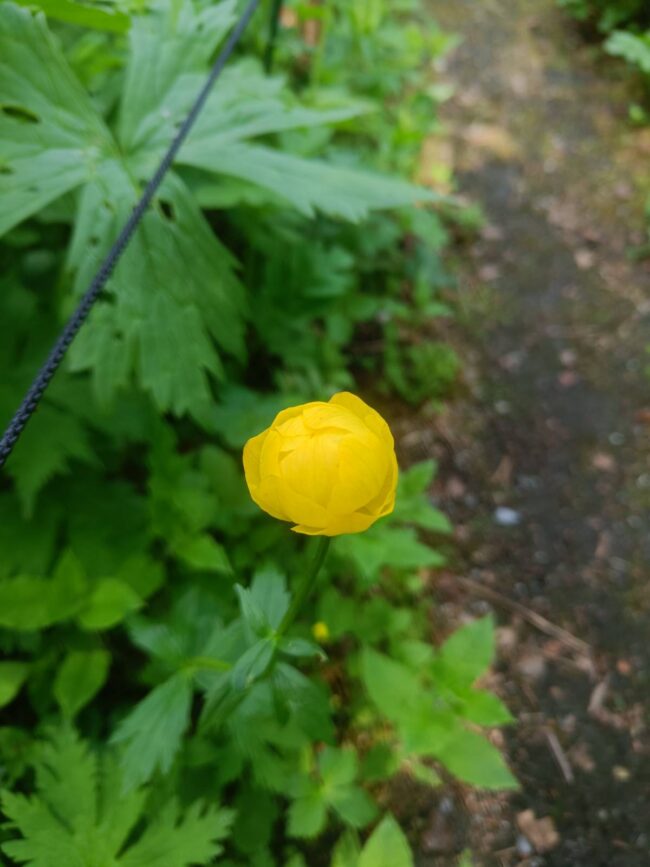
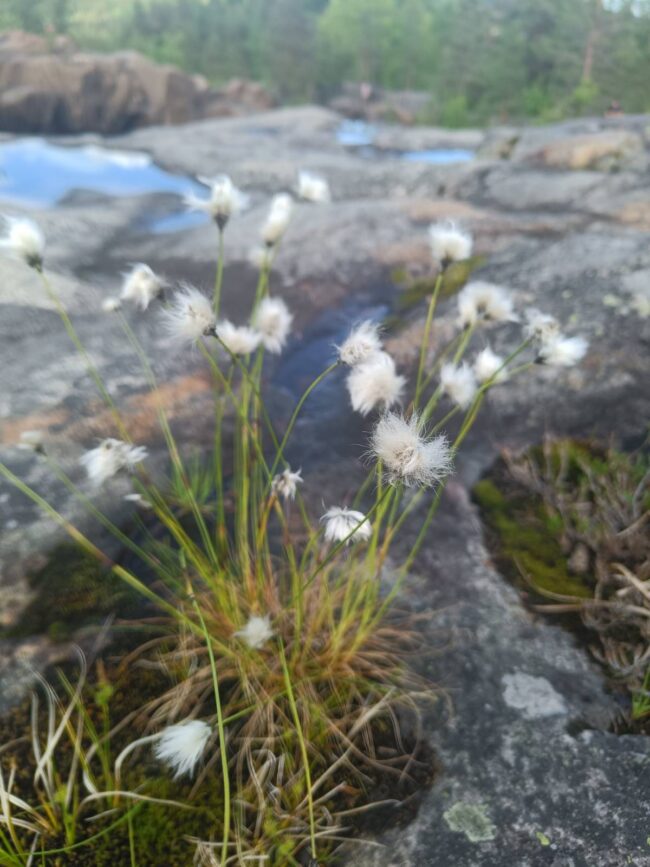
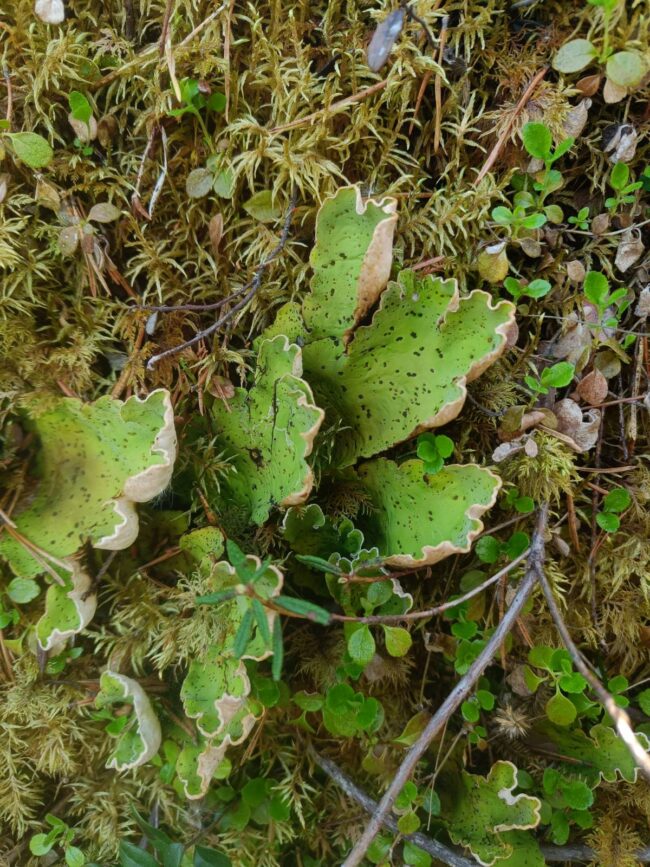
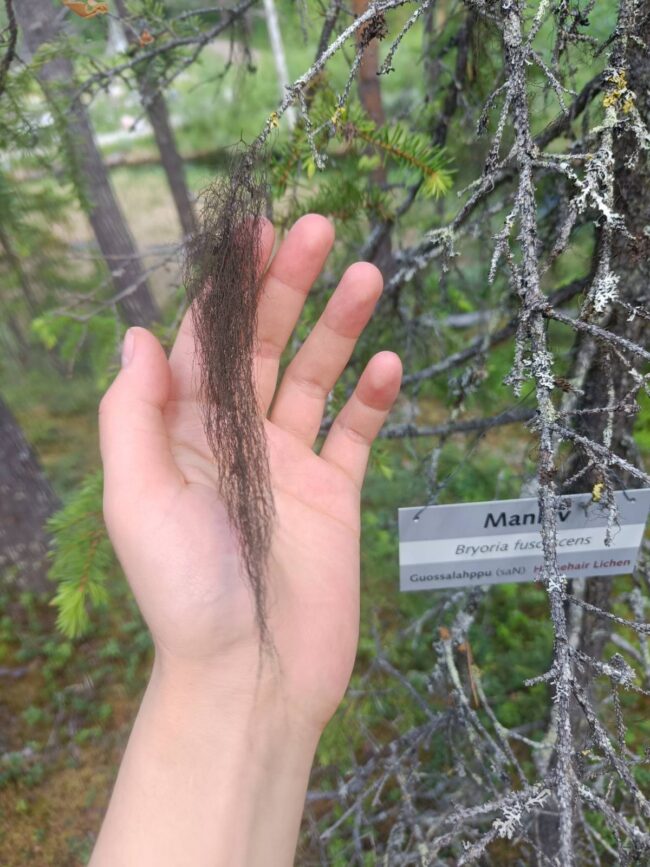
Our last day we spent at the indoor part of the museum. If you ever visit Jåhkamåhke, we recommend not leaving this visit to your last day! ;) We unfortunately didn’t manage to read all the signs, but nevertheless had a great day sucking in information on Sámi and settler history, Sámi spiritual practices, local flora and fauna (and how some of the local fauna’s poo looks like), reindeer (the only deer kind where the female also has antlers), Sámi clothing and Duodji (handicrafts), and the Laponia world heritage site. We were also fortunate to see a temporary exhibition with works of Britta Marakatt-Labba, famous for her embroidery work “Gárjjat (The Crows)”, inspired by the Áltá protests (1979-1981).
The museum shows the beauty of the region, the histories, cultures, ecosystems… and at the same time the threats to these things. We learned about Laponia, a world heritage site and cultural landscape, worked in, lived in, and shaped by humans and reindeer for thousands of years. The traces and signs of this are clear and meaningful to the Sámi people who know them (stones that mark a fireplace of a since removed goathi, or the fields that without the grazing reindeers would have been a forest), and easy to “miss” for outsiders, who can think of this region as untouched nature. Currently, nine Sámi communities live and work here and keep the old traditions alive. Local industrialisation and expansion are threats to the reindeer herding here. Already there are three major hydropower stations, and an expansion of 100 wind power stations are planned. This despite the status of the region as world heritage site. Expansions like these disrupt the ancient connection that people have to this land where every stream, stone, and hill has a name, and is meaningful to the humans as well as the reindeer who have their ancient migration routes here.
The duodji section of the museum shows us beautiful intricate pouches, spoons, jewellery with beads, leather, metal works. The term duodji has a broad meaning, in short: “everything you do with your hands”. It is often translated as Sámi handicrafts. Duodji are created from shared knowledge and traditions as well as the innovations and boundary breaking of the artists and craftspeople who make them. It saddened us to read that there are duodji, some of them hundreds years old, kept in museums away from Sápmi, while Sámi people would like to have them back. To be able to show them in Jåhkamåhke, the Ájtte Museum had to borrow them from other places.
The stealing persists to this day on the intellectual property level. Sámi people often have their art appropriated by non-Sámi people and companies who make money of stealing Sámi motives and designs. We visited the store of the Duodji Foundation which sells duodji and other art, jewellery, and objects made by Sámi artists. The Sámi Made label is used to help customers find genuinely Sámi made items.
Going “home” (Saturday June 13th)
The way back to Bygdeå was as smooth as it could be: after half an hour at the local gas station, we got a ride from someone working in a gold mine near Skellefteå. He did a „little” detour (of 100km) to drop us off at the Ecotopia base in Bygdeå. Back in time to welcome the 2 new ecotopians who arrived later that day :). And, on the way we were blessed with one white reindeer (which brings luck) and a group of reindeer with ecotopia spirit – they couldn’t care less about the cars.
——
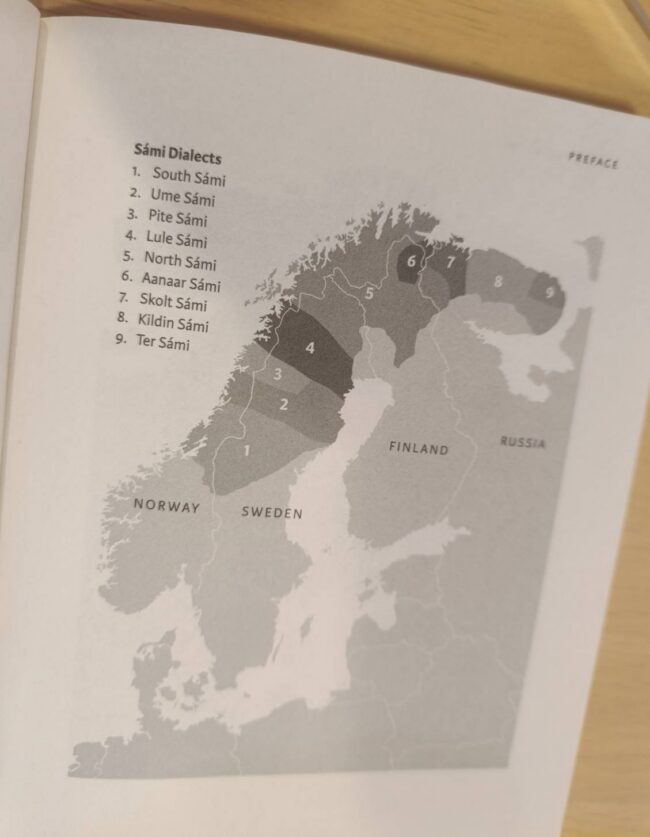
*There is not one Sámi language but at least nine. They can be divided into three major language groups: Eastern, Central and Southern Sami. “Jåhkamåhke” for example is the Lule Sámi name for the Swedish Jokkmokk. The same town is called “Dálvvadis” in Northern Sami. See https://samer.se/samiska for more info :)
**Sámi peoples are sometimes categorised into different groups, depending on their main occupation and where they live: reindeer or Mountain Sámi, forest Sámi, sea Sámi, river Sámi, city Sámi.
***Later we watched the documentary “For our Rights”, which relates the story of Sámi in Norway fighting against mass wind turbines installations, which also impact the reindeer’s natural migratory routes.